
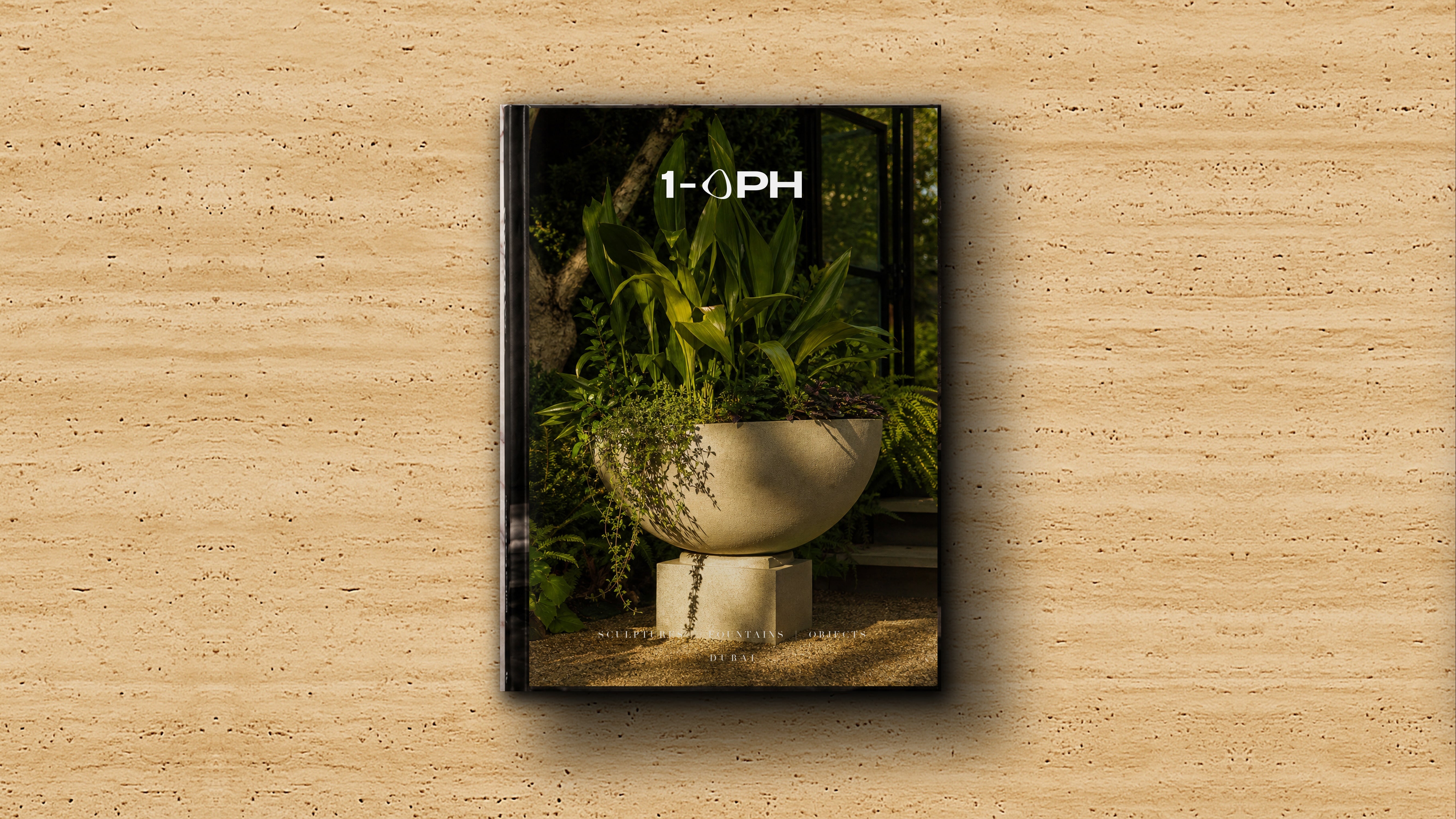
A planter is rarely just a pot. At the right scale and in the right material, it becomes architecture — defining a threshold, framing a view, anchoring a courtyard. Bespoke planters let a garden be composed as deliberately as the house it surrounds.
The planter as a structural element

In a considered landscape, planters do structural work: they mark edges, set rhythm along a path, and define the threshold between one space and the next. Landscape designers use them the way an architect uses columns — to give a garden order and proportion. Seen this way, the planter stops being decoration and becomes part of the architecture.
Matching planters to the landscape style

The form should follow the garden. Contemporary minimalist landscapes — Dubai Hills, District One — want clean, geometric planters with crisp edges. Mediterranean and Andalusian courtyards in Emirates Hills or Arabian Ranches carry classical carved profiles. Lush estate gardens such as those at Al Barari can hold generous, sculptural masses that read as objects in their own right.
Material and the Gulf climate

Marble, stone and bronze all suit outdoor planters, and their weight is an advantage — large stone planters hold their place against wind and stay put without anchoring. Proper drainage and an inner lining protect both the planting and the stone. As with any outdoor piece, marble prefers some shade while bronze and hardy stone take full exposure.
Scale and placement

Planters work hardest in composition: a matched pair flanking an entrance, a measured run defining a terrace edge, or a single oversized mass as a courtyard centrepiece. Scale is usually the thing people underestimate — in a generous Gulf garden, planters need real presence to register.
Commissioning planters as a set

Because they are architectural, planters are best commissioned to the home — sized to the spaces, matched to the house's stone, and made to share a language with other 1-OPH pieces in the garden and interior. A bespoke set ties the whole landscape together rather than dotting it with mismatched objects.
FREQUENTLY ASKED QUESTIONS
What makes a planter "bespoke"?
It is designed and made to your garden — its scale, material, profile and finish matched to the architecture.
What material is best outdoors in the UAE?
Hardy stone and bronze take full sun; marble is best with some shade. Weight helps planters stay put.
How big should garden planters be?
Larger than you expect — in a generous Gulf garden they need real presence to register.
Can planters match my villa's stone?
Yes — bespoke planters can be made in or matched to the home's stone and other pieces.
Do they need special drainage?
Yes — proper drainage and an inner lining protect both the planting and the stone.
1-OPH is an art atelier based in Al Quoz, Dubai. We design and fabricate bespoke sculpture, water features, and architectural art in marble, stainless steel, bronze, and mixed materials — for private residences, hospitality projects, and developments across the UAE and GCC.

Share:
Marble vs Bronze: Choosing a Material for Your Sculpture
Commissioning a Sculpture: The 1-OPH Process, Step by Step