
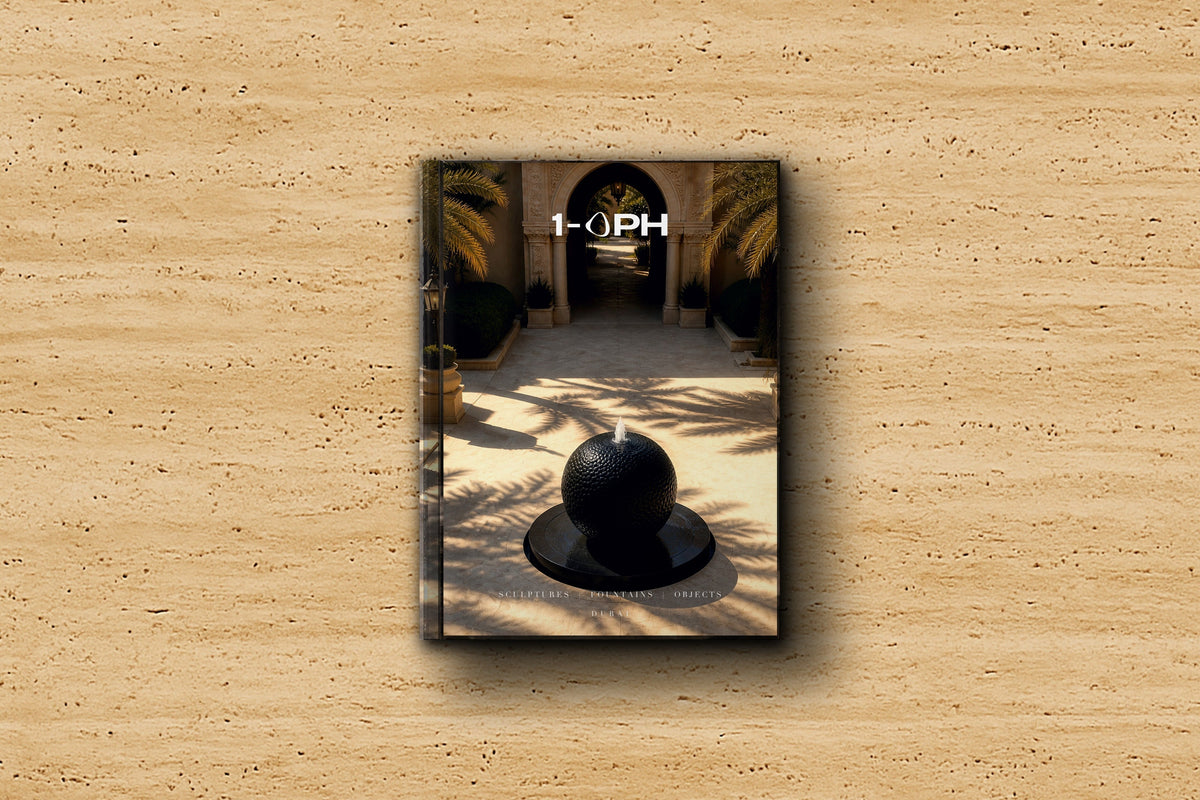
The world's great sculpture gardens teach a single lesson: art and landscape complete each other. Placed well in a landscape, a sculpture gains scale, changing light and a natural frame, while the landscape gains a focus, a destination and a sense of intent. The finest sculpture gardens — where art is set among trees, water, lawn and sky — are masterclasses in placement, and their principles apply directly to a private Gulf garden. This is an editorial on sculpture in the landscape: what the great gardens do, why it works, and how to bring that thinking home.

What the landscape gives a piece

A sculpture in a landscape is transformed by its setting. Natural light moves across it through the day and the seasons, giving it a range of readings no interior can. The sky becomes its backdrop, planting frames it, and the open air lends it scale.
The landscape also lets a piece be approached and discovered. Seen from a distance across a lawn, glimpsed through trees, then reached and read up close, a piece in a garden is experienced as a journey — the essence of what the great sculpture gardens stage so well.
Nature and the hand-made object set each other off. The organic against the crafted, the living against the permanent — the contrast is what makes sculpture in a landscape so affecting.
What the piece gives the landscape

A well-placed sculpture gives a landscape a focus and a purpose. An open lawn or garden without a focal point can feel undirected; a piece gives the eye somewhere to go and the space a destination.
It also marks and reveals a landscape's structure — terminating an axis, anchoring a clearing, marking a threshold between garden rooms. Sculpture does spatial work in a garden, organising and articulating it the way it does indoors.
And it signals intent. A garden with a considered piece reads as designed and cared for, not merely maintained — the same way a considered interior reads as curated.
The principles of the great gardens

The finest sculpture gardens share clear principles. They give each piece room — generous space and a clear approach, never crowding. They place pieces in relationship to the landscape's features rather than at random. They use sightlines to reveal pieces on the move. And they exercise restraint, letting a few strong pieces breathe rather than filling the grounds.
They also let the setting do the framing — a piece against sky, against water, against a mass of planting — choosing backgrounds as carefully as positions. And they consider the piece through the day and the seasons, placing it where the changing light will serve it.
These are the same principles that govern good placement anywhere, heightened by the scale and variability of the outdoors.
Bringing it home to a Gulf garden


The lessons translate directly to a private garden. Even a single well-placed piece can bring the sensibility of a sculpture garden to a villa's grounds — sited at the end of a lawn axis, framed by planting, read from the house, and given room to breathe.
The Gulf climate shapes the choices. Materials are specified for sun, heat and, near the coast, salt; positions balance the drama of full sun against the comfort of shade; and water, so central to the region's garden tradition, pairs naturally with sculpture.
A closing thought: the great sculpture gardens are not really about the individual pieces, but about the relationship between art and place. Brought home, that is the aim — not to decorate a garden with an object, but to complete a landscape with a piece that belongs to it. Do that, and a garden becomes a place with a destination, and a sculpture becomes part of the land.
FREQUENTLY ASKED QUESTIONS
What can sculpture gardens teach about placing art outdoors?
That art and landscape complete each other. The great gardens give each piece room and a clear approach, place pieces in relationship to the landscape's features, use sightlines to reveal them on the move, and exercise restraint — principles that apply directly to a private garden.
What does a landscape setting give a sculpture?
Changing natural light through the day and seasons, the sky as a backdrop, planting as a frame, and the scale the open air lends. It also lets a piece be approached and discovered as a journey, and sets the crafted object against the living landscape.
How does a sculpture improve a garden?
It gives the landscape a focus and a destination, marks and reveals its structure by terminating axes or anchoring clearings, and signals that the garden is designed and cared for rather than merely maintained.
How do you place a single sculpture in a home garden?
Site it at the end of a lawn or path axis, frame it with planting, position it to be read from the house, and give it room to breathe — bringing the sensibility of a sculpture garden to a private plot with even one well-placed piece.
What outdoor considerations matter in the Gulf?
Materials specified for sun, heat and coastal salt; positions balancing the drama of full sun against the comfort of shade; and the natural pairing of water and sculpture, so central to the region's garden tradition.
1-OPH is an art atelier based in Al Quoz, Dubai. We design and fabricate bespoke sculpture, water features, and architectural art in marble, stainless steel, bronze, and mixed materials — for private residences, hospitality projects, and developments across the UAE and GCC.

Share:
Working With Contractors and Fit-Out Firms on Installed Art