
Bronze
Cast by the lost-wax method, chased by hand, patinated to any colour you can describe. The metal that gets better with age.
Chemistry, heat and patience
A patina is not paint. It is the metal itself, coloured with heat and solution, then sealed in wax. We match to a sample, a fabric or a photograph.
What the hand feels
Chasing and finishing decide whether a bronze reads crisp or soft.
Bronze, installed
Cast in sections, welded invisibly, coloured to the interior.


Where to start
Cast to order from our moulds, or from your drawing.
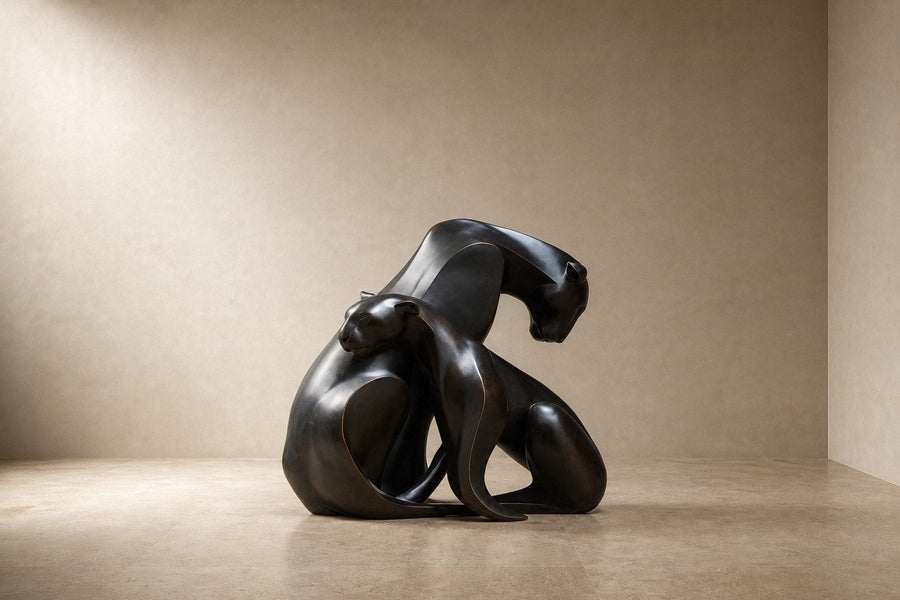
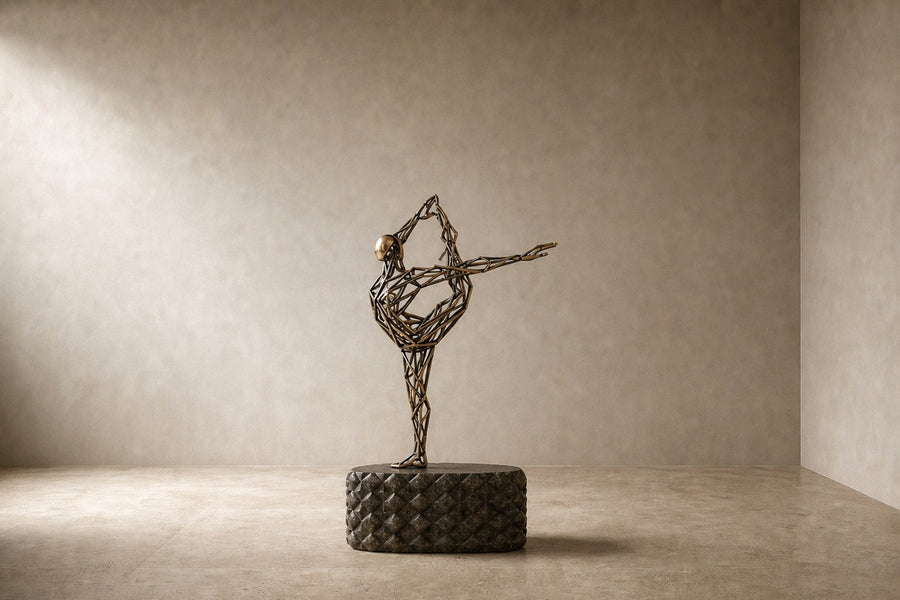


Anywhere, including the sea.
Bronze is the outdoor metal. Ships used it for centuries because salt does not touch it. Gardens, pool edges, facades and lobbies all suit it; indoors it is at its best under a single warm light where the patina shows its depth.
Wax once a year.
A soft cloth and a museum wax keep the patina exactly where we left it. Left alone outdoors, bronze slowly deepens and greens, which many clients prefer. Either way, it will outlive the building.
Straight answers
Hollow cast, with walls of about 6 mm, over an internal frame where the piece needs it. Solid bronze would be far heavier and no stronger.
Yes. Send a sample, a fabric or a photo. We patinate a test plate, photograph it against your reference and adjust until you sign it off.
Cast in sections from the approved clay or 3D model, welded, chased so the seams disappear, then patinated as one piece.
Brass is brighter and yellower and suits polished wall pieces. Bronze is warmer, takes patina better and is the choice outdoors.
A sample in your hand beats any photo.
Tell us the room and the finish you are drawn to. We send samples of bronze to the site or you see them at the showroom in Al Quoz.
Compare before you choose
Every piece on the site can be made in any of the three. The room decides.