
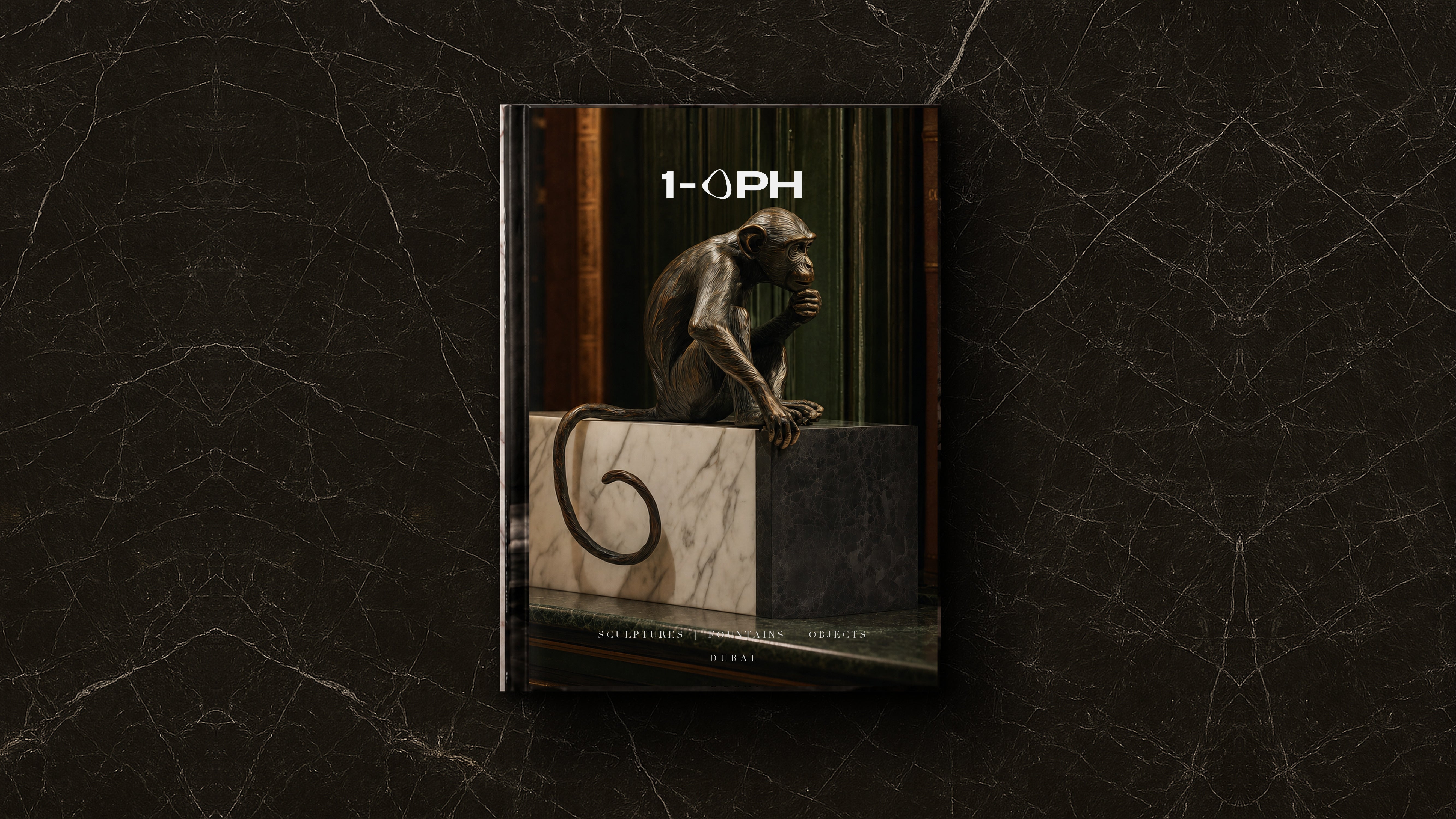
Patina is the coloured surface of a bronze — part chemistry, part craft, part time. It can be developed deliberately at the foundry in browns, greens, blacks and blues, and it keeps evolving slowly for the life of the piece. Understanding it is the key to choosing and living with bronze.
What patina actually is

The colour you see on a bronze is not the raw metal — it is the patina, a thin surface layer formed when the bronze reacts with chemicals, heat and air. It is neither dirt nor damage; it is the finish itself, as deliberate as a marble polish. Raw bronze is a bright gold; almost every bronze sculpture you admire has been patinated to its final colour.
How a foundry creates patina

Patina is applied by hand at the foundry using heat and chemical solutions, building up colour across the surface. The range is wide — warm browns, deep blacks, verdigris greens, even blues — and because it is worked by hand, no two pieces are ever identical. Patinated bronze has been prized since antiquity, where the darkened and green surfaces of aged bronzes came to signal permanence and worth.
How patina ages over time

A patina is a living surface. Indoors it stays close to its original tone for decades; outdoors, especially in the coastal humidity of Palm Jumeirah or a waterfront villa, it evolves faster and deeper. This change is part of the material's appeal — a bronze is one of the few pieces in a home that quietly improves with age.
Matching a patina to its setting

The patina is part of a room's palette, so it is worth choosing with the interior in mind. Warm browns sit naturally in classical and Mediterranean homes — an Emirates Hills or Arabian Ranches interior — while cooler blacks and greens suit the contemporary-minimalist rooms of Dubai Hills, The Oasis or District One. Chosen well, the patina ties the piece to the architecture around it.
Caring for and preserving patina

Preserving a patina is simple: a thin annual coat of microcrystalline wax, gentle dusting and the occasional wash with pH-neutral soap. Avoid abrasives and household chemicals, which strip colour. If a patina is ever scratched or damaged, a conservator can restore it — it should not be attempted at home.
FREQUENTLY ASKED QUESTIONS
Is patina natural or applied?
Usually applied — developed deliberately at the foundry with heat and chemicals, though it continues to evolve naturally afterward.
Can I choose the patina colour?
Yes — on a commission the patina is selected to suit the piece and your interior, from warm browns to greens and blacks.
Does patina protect the bronze?
It forms a stable surface, and a wax coat over it adds protection against moisture and salt.
Will the patina change over time?
Slowly, yes — more so outdoors. Many owners value this gradual deepening.
Can a patina be redone?
Yes, a conservator or foundry can re-patinate a piece if it is damaged or you want a different tone.
1-OPH is an art atelier based in Al Quoz, Dubai. We design and fabricate bespoke sculpture, water features, and architectural art in marble, stainless steel, bronze, and mixed materials — for private residences, hospitality projects, and developments across the UAE and GCC.

Share:
The Quiet Return of Stone in Contemporary Collectible Design
Sculptural Fireplaces as Centrepieces for UAE Homes